Rippling has eliminated tedious manual work, improved accuracy, and enabled faster, more efficient people operations, making HR and IT processes far more scalable and strategic.
Selina Purdie
Head of People at SurrealDB
In this article
HR teams need a complete, up-to-date view of every UK employee. That’s difficult when information is spread across separate payroll, leave, onboarding, and IT systems.
HR teams aren't struggling because they don't have enough software. They're struggling because they have too much. According to the latest State of HR report, 82% of HR teams use four or more tools every month, while more than a third rely on seven or more.
Yet 58% say technology is holding them back. Instead of making work easier, disconnected systems create duplicate data, manual processes, and poor visibility across the employee lifecycle.
As organisations add separate HR, payroll, IT, and onboarding systems over time, employee data becomes fragmented across those platforms. Even answering simple questions suddenly requires multiple logins, reports become unreliable, and everyday tasks take far longer than they should.
In this article, we’ll explore eight ways fragmented HR systems hold UK businesses back. We’ll also explain how a unified platform can cut manual work, improve visibility, and strengthen compliance.
Multiple disconnected HR systems slow down HR teams and increase the risk of costly errors.
Poor data visibility makes workforce planning, reporting, and compliance more difficult.
Bringing HR, payroll, and IT together on a single platform simplifies operations and improves decision-making.
In a tight economy, decisions on hiring, retention, and workforce planning are directly tied to a business’s costs and performance. Here are four pressures that have changed the HR landscape in the past couple of years.
As of 2026, hiring in the UK is slower and more uncertain, with vacancies down and fewer roles being created. This means that teams are now expected to do more with the people they already have. As an HR professional, you’ll need to look at how you can upskill and retain the people you already have.
The same pressure is impacting HR teams, which are now expected to provide more insight as costs come under closer scrutiny. They’re being asked to deliver real-time, decision-ready data while maintaining accuracy across compliance and reporting. Doing all this without the right software can feel like an uphill battle.
There’s a growing gap between what employees expect and what companies are offering. Trust in leadership is falling, and HR is the function expected to close that gap, often without the budget or the data to do it.
The biggest unknown for HR teams is how AI will impact their workforce. 83% of UK employees now use generative AI at work in some capacity. It’s yet to be seen how this will impact workplaces long-term, with predictions ranging from widespread job losses to minor productivity gains.
What’s clear already is that AI is only as useful as the data it can reach. If payroll, HR, and IT data live in separate tools, no AI layer can give you a straight answer about your workforce.
As you work to meet higher expectations with fewer resources, the software you use can make or break your operations. While that might seem obvious, we want to go into eight specific areas where the wrong systems (or disconnected ones) might be holding your team back currently.
Here are the key issues at a glance:
The problem | What it looks like day to day |
|---|---|
1. Data is trapped in different systems | The same employee has different records in payroll, HR, and IT, and none of them agree. |
2. Processes are unnecessarily complex | A leave request needs three approvals and an email chain. |
3. Reporting gaps lead to risky decisions | Headcount and cost reports are built from exports that are out of date by the time anyone reads them. |
4. The employee experience is suffering | People can’t find their leave balance or get a laptop set up without asking HR. |
5. Work becomes disorganised and chaotic | Managers approve leave in one tool and discover the rota gap in another. |
6. Onboarding lacks structure and consistency | New hires spend day one waiting for accounts and equipment. |
7. Payroll and compliance risks are left unchecked | A pay rise lands in HR but not payroll, so tax, National Insurance, and pension calculations are wrong. |
8. Weak governance opens the door to security risks | Nobody can say who has access to what, or prove it to an auditor. |
Many teams struggle when employee data is stored across multiple platforms that don’t communicate properly. This is a problem for both the employee experience and HR’s ability to monitor and report on workplace trends. It also wastes time as HR professionals search for basic information across systems.
For example, if an employee’s salary is updated in the payroll system but not in the HR one, your budgeting forecasts will be incorrect. This can have knock-on effects and impact whether you have the budget to hire or upskill people.
To avoid this, you can bring all your HR needs together in an all-in-one platform like Rippling. Instead of having to update the same information across multiple systems, changes are made once and flow through automatically, reducing manual work and improving accuracy.
Unlike traditional HR stacks that synchronise data between separate HR, payroll, and IT systems, Rippling is built on a unified data model. Employee records, payroll, devices, application access, and organisational data all live on the same platform, so a change only needs to happen once to flow automatically across every connected workflow.
And because Rippling AI works from the same real-time employee data, HR teams can use natural-language prompts to generate insights about headcount, compensation, leave balances, or organisational changes without manually building reports. The responses will also respect existing user permissions, so only those with access can see relevant data.
As businesses mature, processes can snowball. Even when technology could solve the problem, the outdated processes linger, and even the most basic tasks require too many steps, approvals, and workarounds. Unnecessary checks and manual handling ultimately bog down processes that should be straightforward.
This significantly increases the admin burden. That heavy load is altogether too common; 50% of HR professionals report spending between a quarter and half of their time on admin work.
For example, approving annual leave might involve multiple approval layers, manual tracking, and back-and-forth emails, while modern HR tools could do all this in the background. To overcome these kinds of challenges, teams need to review their processes and move them into a single system, so approvals happen automatically rather than by email and compliance checks run without constant hands-on work.
When key data is missing, any reports you generate are unreliable. Even if you have top-of-the-line systems in place, if data is duplicated and spread across different places, you’ll be operating under false assumptions.
This matters because HR is expected to guide real business decisions. If you don’t have a clear view of what’s happening today, it’s hard to plan hiring, manage costs, or spot issues early.
To fix this, teams need to standardise how data is captured and make sure systems are connected so reporting is consistent and easy to interpret when it’s needed. Platforms like Rippling also allow HR leaders to ask questions in plain English to generate reports rather than manually building them. Instead of exporting data into spreadsheets, they can quickly understand workforce trends using live HR and payroll information.
HR professionals have a unique perspective; they’re employees themselves and the ones shaping the employee experience. The effects of bad systems are all the more obvious and persistent.
For example, if you have a reporting meeting to prepare for and your software is lagging and data is inconsistent, it will lead to frustration and stress. The same applies when anyone in the business, HR included, wants to do simple things, such as see their leave balance or get set up on a new device, and can’t get to what they need.
The simplest way to fix this is to choose a powerful all-in-one system. This means all your data connects and updates in one place, while also speeding up everyday tasks so no employee is stuck waiting on slow or manual processes. On top of this, Rippling brings IT management into the same software so you can manage access, devices, and permissions alongside other HR tasks.
When systems and processes aren’t connected, work quickly starts to feel scattered. Tasks sit in different places, information is hard to find, and people rely on messages or workarounds to get things done.
For example, a manager might approve leave in one system but have no visibility over shift scheduling, so days end up understaffed, or workloads become uneven. When they go back to fix it, it creates a chaotic scramble for cover with last-minute changes that waste time and disrupt the team.
To solve this, teams need to centralise their data and workflows into a single system. When HR, payroll, and IT are all in one place, managers can make updates once and have changes sync across the system.
Because Rippling connects HR, payroll, and IT on the same platform, a single event, such as hiring a new employee, can automatically trigger payroll setup, software provisioning, device allocation, and onboarding tasks without HR having to coordinate with multiple systems. Additional features in Rippling, like automated HR workflows and live reporting, also give your managers a clear view of team capacity without needing to cross-check multiple tools.
When businesses invest so much time and money attracting top talent, a poor onboarding experience is an expensive way to lose that investment. New hires who leave in the first few months usually cite poor onboarding or mismatched expectations, and both are avoidable.
First impressions matter. But too often, new hires arrive on their first day to find their laptop isn't ready, their accounts haven't been created, no one has time to welcome them, and they spend hours waiting for someone to tell them what to do next.
These delays aren't inevitable. They're often the result of disconnected HR and IT systems that require multiple manual steps to prepare a new employee for their first day.
Organisations not using Rippling typically spend more than five hours setting up a new employee's computer and more than five hours configuring third-party applications. With Rippling, where HR and IT work together on the same platform, customers can complete both tasks in around five minutes through automated device and application provisioning.
The impact can be dramatic when onboarding is fully automated. For example, software company SurrealDB reduced onboarding time from two weeks to just five minutes after implementing Rippling, while also saving around £200 per employee per month on EOR services.
Rippling has eliminated tedious manual work, improved accuracy, and enabled faster, more efficient people operations, making HR and IT processes far more scalable and strategic.
Selina Purdie
Head of People at SurrealDB
Payroll and compliance issues often go unnoticed until they become costly. This tends to happen when teams have inconsistent data or processes that aren’t tightly controlled, which leads to errors in pay, tax, and reporting to HM Revenue & Customs (HMRC). And when the error is in someone’s pay, they notice before you do.
If teams are working across different systems, and an employee gets a pay rise, it might only be updated in the HR management system. If that change isn’t reflected in payroll, it leads to incorrect pay, tax, National Insurance, and pension calculations.
To reduce this risk, teams need systems that are connected and kept up to date with UK requirements. This helps keep your payroll compliant as rules change, and reduces the chance of errors.
Rippling customers also process payroll between 18 and 110 times faster than the average organisation because payroll runs from the same employee data that powers HR and workforce management.
Most HR professionals don’t have a PhD in data security, and they shouldn’t have to. No business thinks they’re at risk of a breach until it happens. Also, we often imagine these breaches as malicious hacking attacks, when in reality, human error is a significant cause of data breaches.
In 2025, the UK Post Office provided one example of how easily this can happen when it accidentally published an unredacted document online. This exposed the names and addresses of over 500 individuals involved in the Horizon scandal. This error, which likely caused a lot of emotional turmoil, wasn't a cyberattack. It was a simple mistake made when uploading a file.
To avoid these kinds of errors, teams need stronger governance across their systems, with clear access controls, audit trails, and structured processes. Platforms like Rippling bring these into one place, with role-based permissions applied across HR, payroll, and IT data, so you can reduce the risk of human error and help keep sensitive information secure.
Here’s what to look for when you’re trialling platforms or sitting through demos:
Access controls
Audit trails
Single employee records
AI-powered reporting using live workforce data
Real-time data syncing
A UK payroll engine
HMRC reporting
Pension auto-enrolment management
Automated workflows
Employee self-service for leave, payslips, and personal details
Analytics and reports
GDPR-compliant data storage and security
If a platform is missing these, you’ll likely end up finding workarounds that lead to the same gaps you’re trying to fix now.
Fragmented systems can easily build up over the years and create more problems than they solve. With inconsistent data, manual work, compliance risks, and poor employee experiences, it’s clear that teams deserve better.
At the same time, HR is more connected to business performance than ever, and teams are expected to do more with less. That’s where the right software can make a real difference, improving both day-to-day work and the employee experience.
If you’re looking to simplify your HR operations, Rippling brings HR, payroll, finance, and IT into a single system, helping you stay compliant, reduce admin, and keep everything in sync as your business grows.
The benefits extend well beyond administrative efficiency. Forrester found that organisations using Rippling increased operational efficiency in HR, payroll, and finance by 42%, saving the equivalent of up to three full-time employees while allowing HR teams to spend more time on strategic work.
Book a demo today to see how Rippling can unify and simplify your HR processes.
A fragmented HR system is one where different HR functions, like payroll, recruitment, and performance, are managed across separate tools that aren’t connected. This leads to duplicated data, manual work, and gaps in reporting.
Common risks include reporting Pay As You Earn (PAYE) information incorrectly, making errors in National Insurance and pension contributions, failing to meet minimum wage requirements, and missing HMRC deadlines. These can lead to fines and back payments. Using a system like Rippling, which tracks changes and automatically applies compliance rules, helps reduce compliance risk.
UK HR teams typically use a mix of HRIS platforms, payroll software, applicant tracking systems (ATS), and performance tools. Increasingly, businesses are moving toward all-in-one platforms, like Rippling, that combine HR, payroll, and compliance in one system.
A stellar onboarding process is structured and combines both in-person support and digital setup. For a step-by-step guide, download our free onboarding checklist.
Disclaimer
Rippling and its affiliates do not provide tax, accounting or legal advice. This material has been prepared for informational purposes only, and is not intended to provide or be relied on for tax, accounting or legal advice. You should consult your own tax, accounting and legal advisors before engaging in any related activities or transactions.
Global HR, IT and Finance know-how directly from the Rippling team.

The hidden cost of disconnected HR and payroll systems for UK businesses
Find out what 'disconnected' HR and payroll systems really look like, why they’re such a problem for UK businesses, and what to look for in a better, more unified system.

HR automation software for UK businesses: Benefits, workflows, and compliance explained
Discover how HR automation software reduces tedious tasks and helps UK HR teams manage payroll, compliance, and employee data efficiently.

How to Consolidate and Integrate All Your HR Tools Without Disruption
Integrated HR and payroll systems reduce admin, improve accuracy, and support AI. Learn how to consolidate your tools without disrupting payroll.
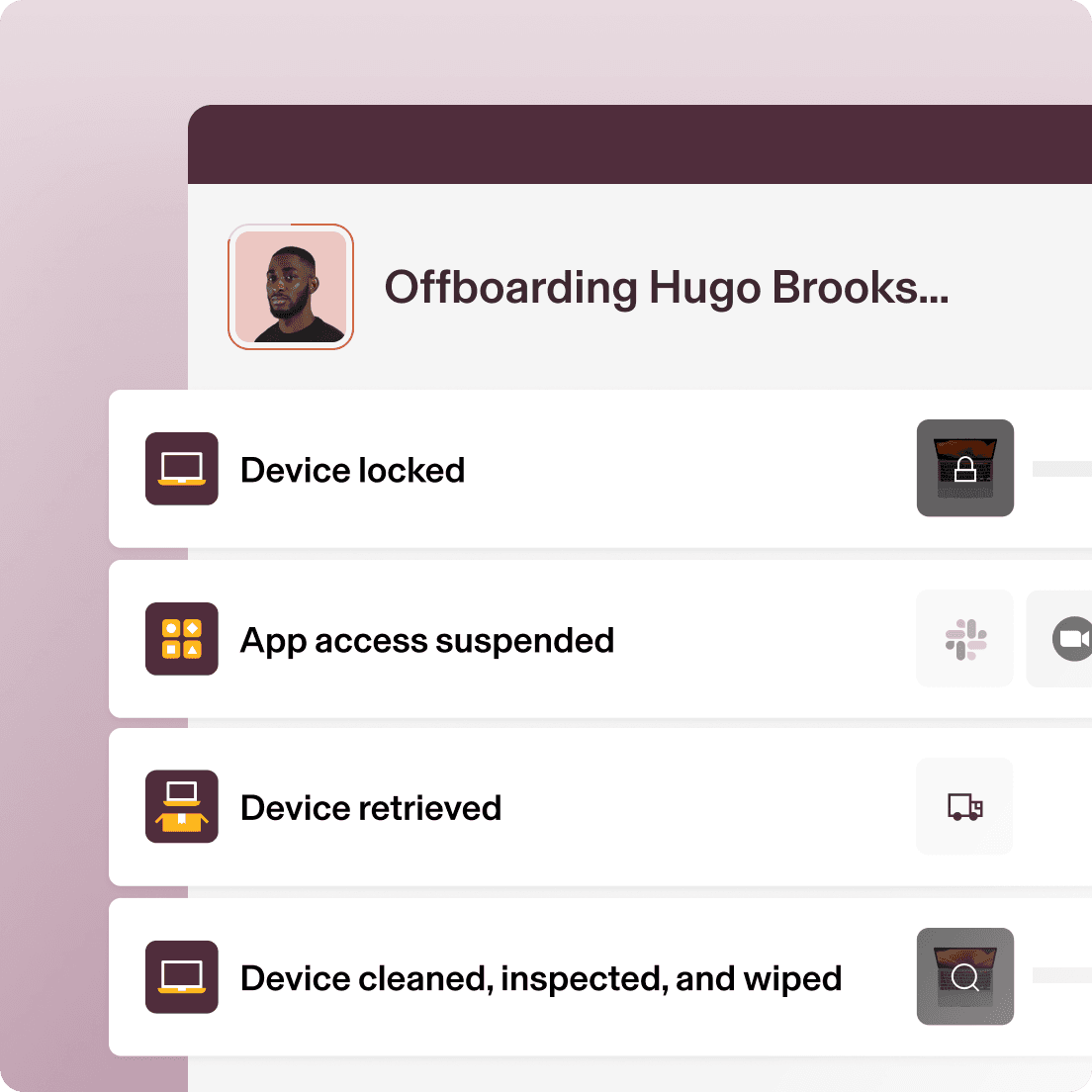
The Great Offboarding: The UK gap putting you at risk
Most businesses assume former employees lose access the moment they leave. In reality, forgotten permissions, unmanaged apps and disconnected systems often leave company data exposed long after offboarding is complete. Here’s why poor offboarding creates serious security, compliance and operational risks for Irish businesses — and what modern organisations are doing to close the gaps for good.

How to create an effective HR strategy for your UK business
Discover HR retention strategies, ways to improve employee engagement, common mistakes to avoid, and how HR software platforms can support your goals.

Automation in UK workplaces: What's really holding back productivity?
Software and automation spending in the UK is at record highs, but workplace productivity hasn't moved. Learn what's holding it back.
Expert Workforce Planning Process Guide for UK Businesses
Discover the best workforce planning process for UK businesses. Our guide covers the best software, different planning models, and more.
Nike, H&M and Uber Lost Millions to Payroll Compliance Failures. Don't Be Next.
Compliance failures don’t just happen to small companies—Nike, H&M, and Uber have all paid the price. This article explores how hidden risks in payroll, worker classification, and people data can quietly build across disconnected systems, and why treating compliance as a core part of your infrastructure is key to avoiding costly mistakes.
Increase savings, automate busywork and make better decisions by managing HR, IT and Finance in one place.
