Rippling and its affiliates do not provide tax, accounting, or legal advice. This material has been prepared for informational purposes only, and is not intended to provide, and should not be relied on for tax, legal, or accounting advice. You should consult your own tax, legal, and accounting advisors before engaging in any related activities or transactions.
The Spreadsheet That's Running Your HR (And the Risk You're Probably Not Seeing)
In this article
Spreadsheets have served UK and Irish businesses well for decades — but for growing SMEs HR teams, the question worth asking is whether they're still pulling their weight.
In 2024, reports of employee data breaches to the UK's Information Commissioner's Office hit a six-year high — 3,679 incidents, up 14% on the year before. A significant chunk of those came down to human error: a file sent to the wrong person, a hidden tab left exposed, a salary record that somehow landed in a reply-all. The kind of thing that happens when your people data is held together with spreadsheets, shared drives, and optimism.
You know the setup. The master employee file that lives on someone's desktop. The holiday tracker with the colour-coded tabs that only Sarah in HR fully understands. The onboarding checklist saved as a Word doc and emailed around each time someone new starts. The common denominator is that they're all held together by institutional memory and habit — and they're all quietly creating risks that most SME leaders haven't fully reckoned with.
Your HR team is spending half their week on admin. Literally.
New joiner? Someone manually keys their details into multiple files. Salary change? Three tabs need updating. Manager wants a headcount report? An HR person has to drop everything, stitch together data from four different places, and format it into something that doesn't look like a cry for help.
Research by Deloitte found that HR teams spend 57% of their time on administrative tasks — payroll, leave management, compliance reporting. That's more than half the working week, before anyone's had a chance to actually do HR. The strategic stuff — hiring well, building culture, retaining people.
A senior HR professional spending a day a week on avoidable admin is a day a week of strategic thinking that never happens. And that adds up fast.
One misfired email away from a bad day
Here's the thing about spreadsheets: they're a remarkably good human error machine. A salary file goes to the wrong person. A tab gets left unhidden before a doc is shared. A VLOOKUP pulls the wrong row. None of this is malicious — it's just what happens when sensitive data lives in files that anyone can edit, copy, or forward.
The ICO's own research found that human error was a factor in 70% of personal data breach reports it reviewed. Under GDPR enforced by the Data Protection Commission — a reportable breach has to reach the regulator within 72 hours of discovery. Fines for serious infringements can reach £17.5 million or 4% of global turnover, whichever is higher.
No audit trail. No access controls worth speaking of. No breach detection. Most businesses running HR on spreadsheets are one misfired email away from a regulatory conversation they are not prepared for.
The Employment Rights Act 2025 just made things more complicated
April 2026 brought the biggest shake-up to UK employment law in a generation. Major provisions of the Employment Rights Act 2025 came into force: expanded family rights, changes to statutory sick pay, and new record-keeping obligations — including a requirement to retain holiday pay records for six years. (That's six years of records, in a spreadsheet, maintained accurately...)
There's more on the way. The unfair dismissal qualifying period drops to six months from January 2027, backdated for anyone employed after July 2026. The CIPD has warned that smaller businesses could unintentionally fall foul of the law given the sheer breadth of reforms — and the government's new employment guidance requires auditable records across a growing list of obligations.
(Again, auditable records - in a spreadsheet that seventeen people have edited since 2021….)
The spreadsheet isn't free. It just doesn't send an invoice.
There's no line item for "HR manager spent Tuesday rebuilding a report that should already exist." No charge for "sensitive employee data with no access controls." The cost is real; it's just invisible until it isn't.
Time cost: HR doing admin instead of HR. Compliance cost: no audit trail, no breach detection, one misfired email from a fine. Opportunity cost: decisions made on stale data, because getting accurate headcount figures out of a spreadsheet takes longer than anyone has time for.
Most growing businesses hit a point where the spreadsheet stops being a workaround and starts being the problem. They usually hit it earlier than they expected.
The best time to ditch the spreadsheet was a year ago. The second best time is now.
Every hour your HR team spends on admin is an hour not spent on the things that actually determine whether your business thrives: hiring the right people, keeping them, and building a culture worth staying for. That's hard to do when you're buried in tabs.
Consolidating your people data into one system doesn't just save time — it changes what your HR team can focus on. Faster onboarding means new starters feel the benefit from day one. Better visibility means managers can spot problems before they become resignations. And when HR has headspace to think strategically, the whole business moves differently.
The SMEs that will look back and wonder why they waited aren't the ones who couldn't afford to move. They're the ones who assumed the move would be harder than it was.
Rippling is built to get you up and running quickly, with your existing data, without the six-month implementation project. (The spreadsheet had a good run). See how easy it is to move on.
Disclaimer

Author

Sinead Reilly
Sr GTM Manager, EMEA
Explore more

15 Jul 2026
|
6 min
Migrating from Spreadsheets to an HRIS: Less Painful Than You Think
Most SMEs assume migrating from spreadsheets to a modern HR system will take months of pain. It won't. For a small or mid-sized business, a well-scoped HRIS implementation typically takes between two and eight weeks — and the platform does most of the heavy lifting. This guide walks through five practical steps to get your people data moved over cleanly, your compliance set up correctly, and your team actually using the new system.

7 Jul 2026
|
3 min
Why UKI SMEs Are Facing Record Employment Tribunals in 2026
Employment tribunal claims in the UK hit a record backlog of 523,000 in late 2025, while Ireland's Workplace Relations Commission saw complaint applications surge 44% in the same year. The Employment Rights Act 2025 is reshaping employer obligations fast — with day-one rights, a new enforcement body, and a doubling of the tribunal claims window from October 2026. For SME CEOs and HR leads, the cost of getting this wrong is rising on both sides of the Irish Sea.
19 May 2026
|
7 min
The Great Offboarding: The Irish gap putting you at risk
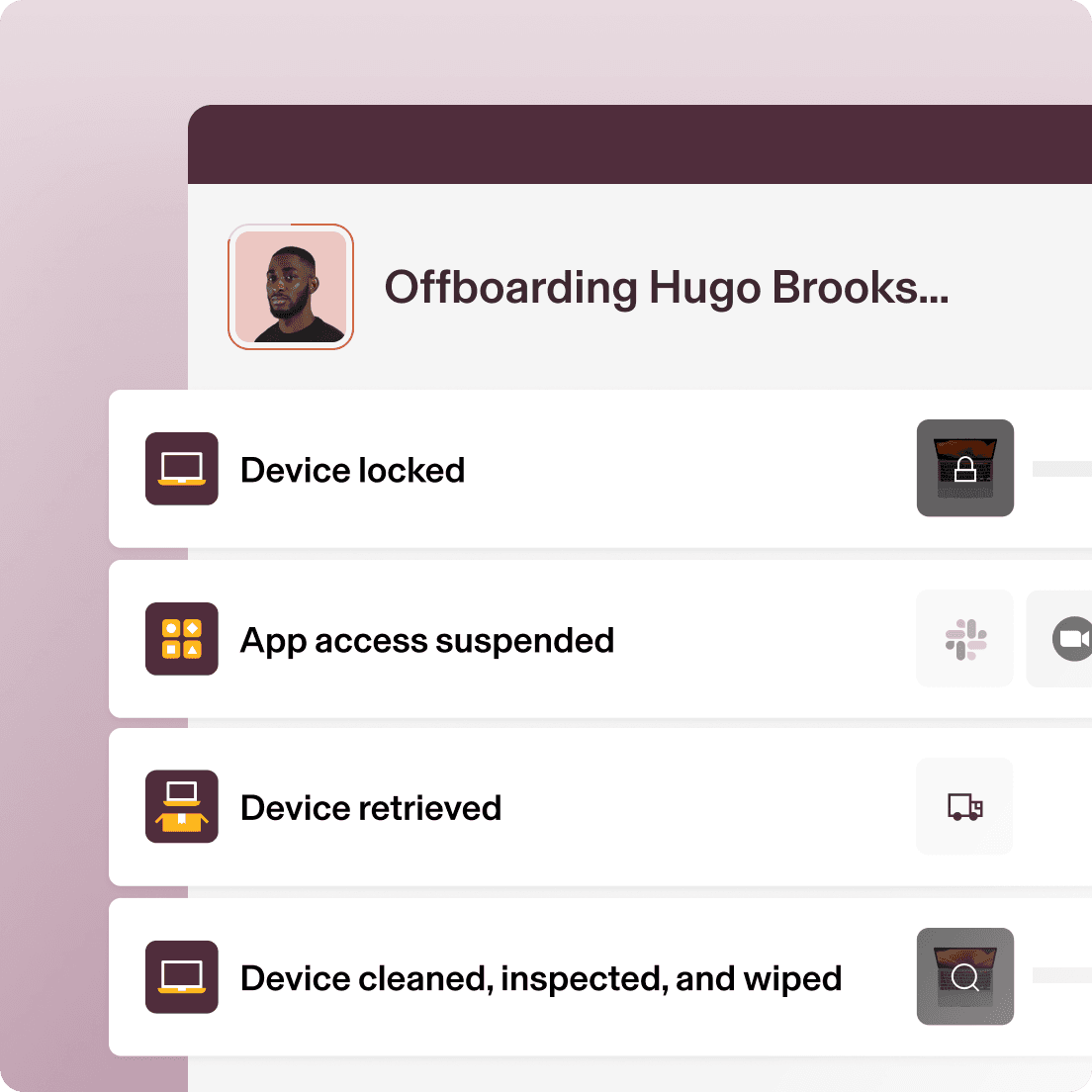
Most businesses assume former employees lose access the moment they leave. In reality, forgotten permissions, unmanaged apps and disconnected systems often leave company data exposed long after offboarding is complete. Here’s why poor offboarding creates serious security, compliance and operational risks for Irish businesses — and what modern organisations are doing to close the gaps for good.

23 Jul 2026
|
8 min
HR Is No Longer Support. It's Strategy. Are UK SMEs Ready?
HR earned its seat at the leadership table during Covid — and it's not going back to filing contracts and booking Christmas parties. With 92% of HR leaders expecting deeper AI integration but only 21% closely involved in AI strategy, UK SMEs face a clear choice: keep HR in the back office, or put it where it belongs.

7 Jul 2026
|
5 min
How to stay compliant as UK and Irish employment law tightens
Employment tribunal claims are at record levels in the UK and Ireland — and incoming changes to the Employment Rights Act 2025 are set to raise the stakes further. This guide covers the practical steps SMEs should take now: from updating contracts to fixing documentation, training managers, and building a single source of truth for people data.

22 Jan 2026
|
4 min
How Sequoia Riverlands turned five spreadsheets into one automated cost calculator
See Sequoia Riverlands ditched spreadsheets and automated employee cost calculation with a custom Rippling app.
22 Apr 2026
|
5 min
The Top 3 Benefits Irish Employees Want (But Don’t Ask For)
Most Irish employees won’t tell you why they’re thinking of leaving—but the data does. From financial wellbeing to genuine flexibility and mental health support, the benefits that matter most are often the least discussed. Discover the top three benefits your workforce actually wants—and how getting them right can reduce turnover and improve performance.

26 May 2026
|
8 min
The Great Offboarding: The Dutch compliance gaps hiding in plain sightc
Hybrid work, contractor access and fragmented systems are creating major offboarding risks for Dutch businesses. As organisations navigate GDPR (AVG), works council oversight and growing SaaS sprawl, many are discovering that outdated manual offboarding processes leave dangerous compliance and security gaps behind long after employees or contractors leave.
See Rippling in action
Increase savings, automate busy work, and make better decisions by managing HR, IT, and Finance in one place.